16 May, 2006

National day and the bunad

The 17th of May is Norway’s National day. This is a huge celebration. I’ve been thinking a lot about this lately, mainly from a craft perspective. There are two main reasons for that. First, starting to write this blog has made me even more aware of everything handmade. Second, I’ve read a book that made me think (again) about how men’s achievements through history have been recorded all the time, while women’s achievements tend to be overlooked. One of the key features when you look at our celebration today is the extensive use of the national costume, or as we call it: the “bunad”. The bunad is not just one costume; it comes in about 400 different varieties. Every city, village and mountain top seems to have their own. But mind you, they’re all made in accordance with strict rules. And this is serious business. You don’t mess with the bunad, or the “bunad police” will come and get you ;-)
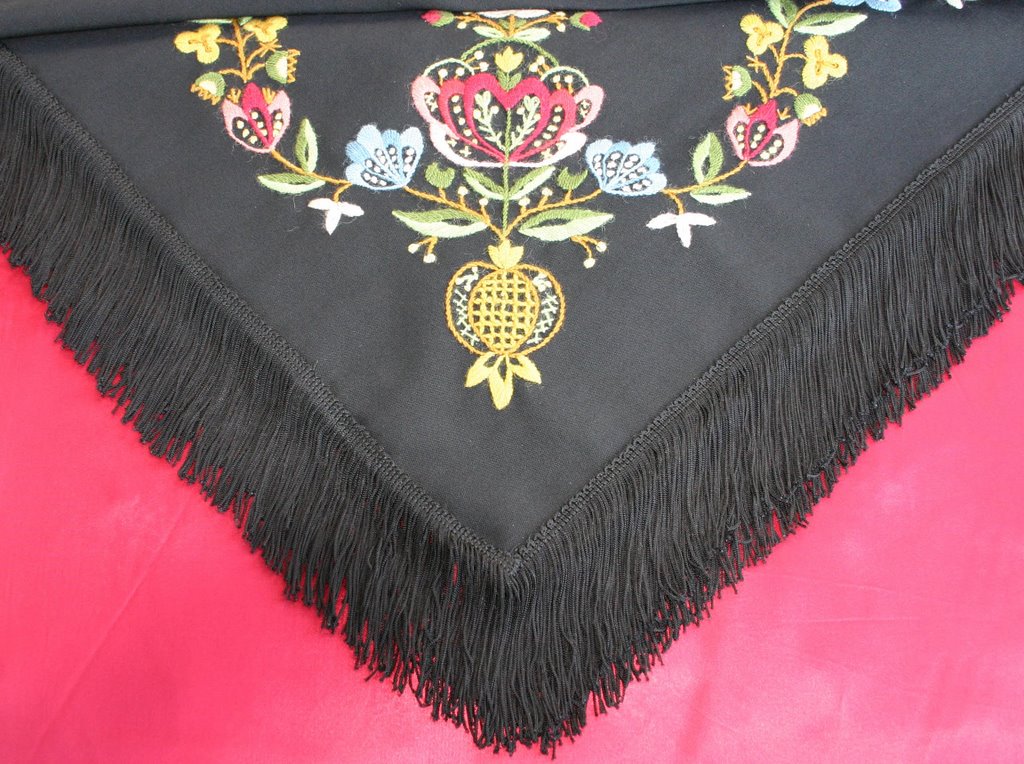
The bunad tradition is about 100 years old, and some of the costumes are based on old traditions, others are varieties that have been constructed during the last 100 years. They evolved when Norway got it’s independence a 100 years ago. This independence resulted in an intense national romantic period, and the bunad was one of the results of that era. We’re out of this national romantic period now (luckily), but the use of the bunad has remained.
What I really love about the bunad is that it is almost all about women’s achievements with their needles and threads. Instead of celebrating the National day with generals, soldiers and tanks (a masculine world), we celebrate it with the work and creativity of generations of women. This makes me really proud.
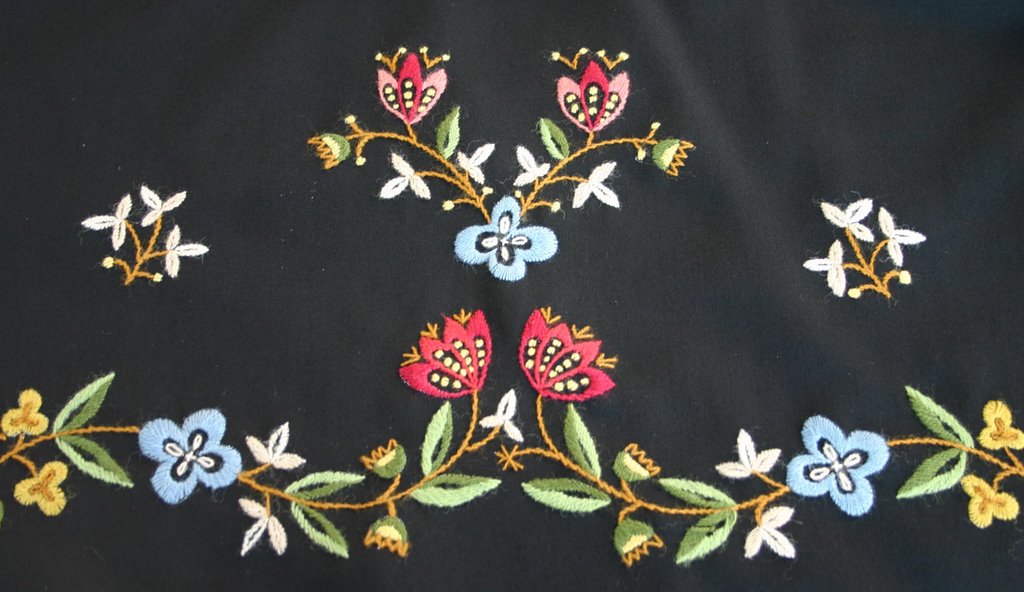

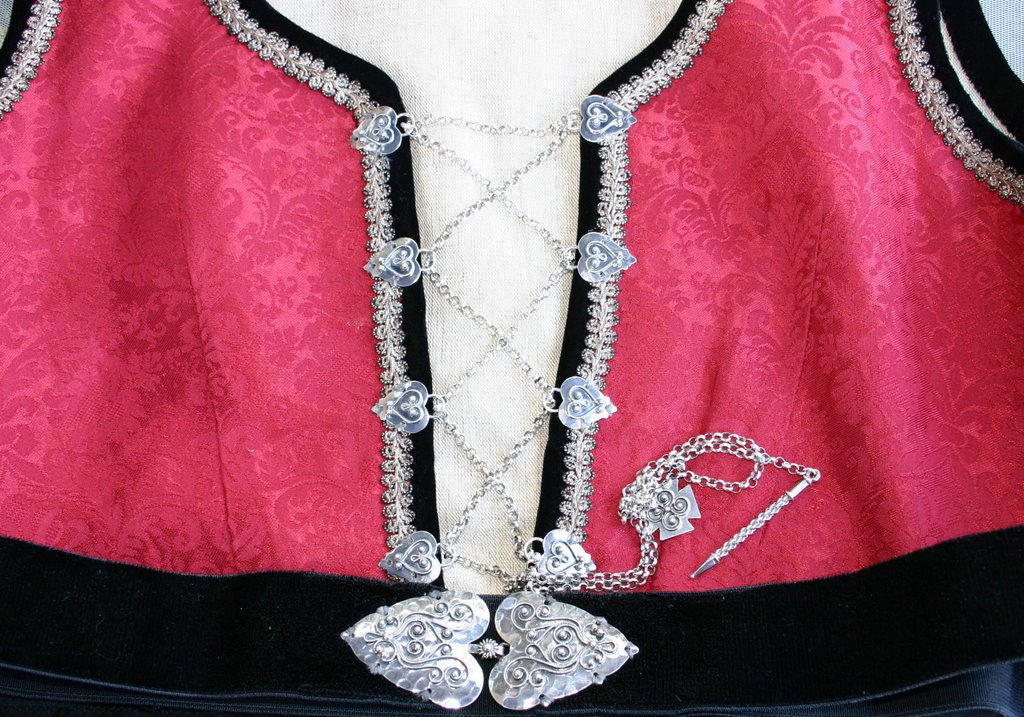
I’m presenting some pictures of my own bunad here. This is a Rogalandsbunad, meaning that the bunad (and I) come from a region called Rogaland. The main reason I appreciate my bunad so much, is the fact that my mother made this bunad for me herself. There’s a lot of work and love behind this. I remember my mother working on this for several months, before she gave it to me as a gift when I was 15 years old. The shirt was made by my best friend's mother. The silver was presents from my grandparents and other family members and friends. It makes me happy to have a bunad that has been given to me from people dear to me. This makes me feel that I have a very personal costume, although it looks like every other bunad from the same region.

This is what Wikipedia say about the bunad


Even the wild cherry trees have put on their best dress today :-)

11 May, 2006

Hildes Sommerkveldsjal / Hilde's Summer Evening Shawl


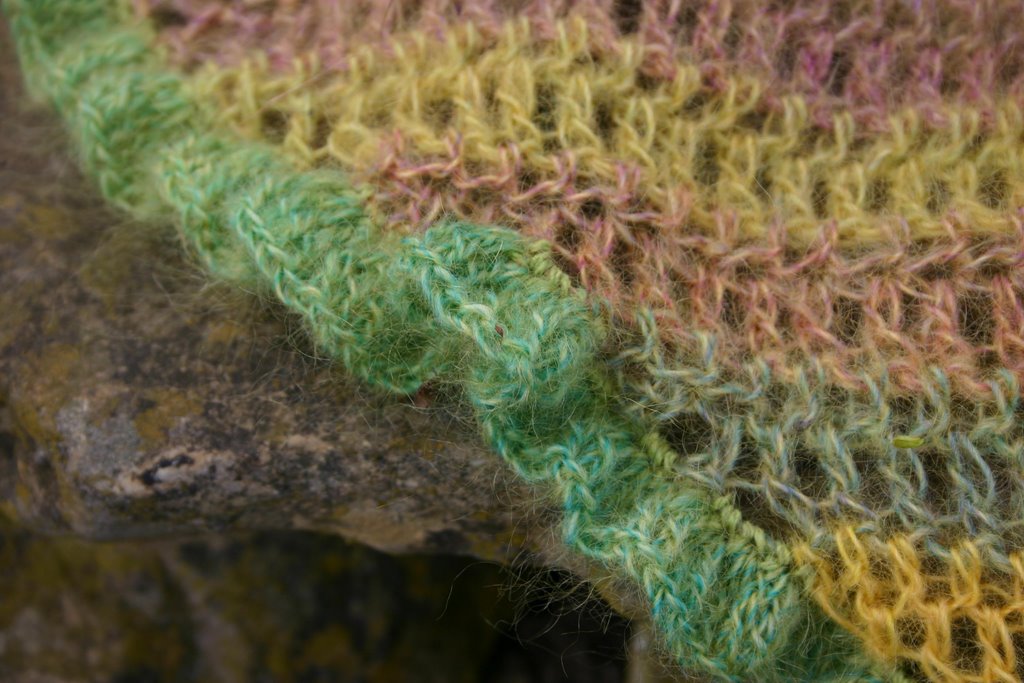
En av fordelene med å være uten PC en stund, er at jeg har fått gjort et stort hekleprosjekt. Jeg hadde i utgangspunktet tenkt å bruke en ferdiglaget oppskrift, men av ulike grunner endte jeg opp med å koke i hop min egen. Jeg prøvde ut mange forskjellige, mer eller mindre avanserte maskekombinasjoner, men endte opp med det enkleste: Luftmasker, fastmasker og halvstaver. Hovedgrunnen var at det allerede er så mange ulike farger i dette Mohair Lux garnet fra Idèna (farge nr. 23), så jeg var redd det hele ville bli for mye av det gode. Målet mitt var et kjempesjal, et jeg virkelig kan pakke meg inn i, nærmest som et teppe. Det målet har jeg nådd, da dette sjalet er digert: 2,5 meter over skuldrene, og 1,10 meter fra nakken og ned. Sjalet er likevel utrolig lett (350 g som = 7 nøster). Det er akkurat passe lunt og varmt for en litt kjølig vår – sommer - eller høstkveld. I tillegg er det svært mykt og deilig mot nakne armer. Mohair Lux seiler definitivt opp som et av mine favorittgarn. Fargene minte meg om vår og sommer da jeg fant det i butikken, og derfor måtte jeg bare ha det :-) Nå ser jeg fram til mange vår - og sommerkvelder helt innpakket i mohair ;-)

Oppskrift på Hildes Sommerkveldsjal:

Jeg har brukt heklenål nr 6, og jeg hekler temmelig løst. Målene er deretter.

1. rad: Luftmasker, ca 240 av dem (det gir størrelsen 2.50 meter over skuldrene, og 1,40 meter fra nakken og ned. 200 luftmasker vil gjøre sjalet ca. 2,10 meter over skuldrene, og 85 cm fra nakken og ned. 150 luftmasker vil gjøre sjalet ca. 1,60 over skuldrene og 55 cm fra nakken og ned).

2. rad: 1 fastmaske i hver luftmaske fra forrige omgang.

3. rad og videre til sjalet er ferdig: 1 halvstav i hver maske fra forrige omgang. Jeg unnlot å hekle den første og siste masken på hver rad, og slik minsket maskeantallet med 2 masker på hver rad, slik at sjalet skråner innover hele tiden.

Kant rundt:

Her brukte jeg heklenål nr. 3,5 hele tiden.
Jeg heklet fastmasker rundt to av sidene på sjalet. Jeg brukte Silke-Tweed (fra Garnstudio, farge nr. 21) til det, og det var kun på grunn av fargen. Deretter brukte jeg Mohair Lux igjen (nål nr 3,5) og heklet 2 staver i hver fastmaske fra forrige omgang. Voilà – ferdig!


One of the advantages about being without a PC for a while was that it gave me the time I needed to do a large crochet project. I planned to use a readymade pattern, but for different reasons I ended up making my own pattern. I tried a lot of more or less advanced stitch combinations, but ended up using a simple way of doing it: Using chain stitches, double crochet, and half treble stitches. The main reason for this is that the Mohair Lux yarn from Idèna (colour number 23) has already got so many colours in it, so I was afraid it would be too much. My goal was to make a very big shawl, something I could wrap around myself, almost like a blanket. And this shawl is huge: It’s 2,5 meters across the shoulders, and 1,4 meters from the neck and down the back. So I can definitely say I’ve reached my goal :-) Despite the size, this shawl is very light (weighing 350 grams, which = 7 balls of yarn). It’s just perfectly warm for those slightly chilly spring – summer – or autumn evenings. I addition it’s very soft against naked arms. One thing is certain, Mohair Lux has become one of my favourite yarns. The colours reminded me of spring and summer when I saw it at the yarn store, that’s why I chose it. Now I’m looking forward to nice evening’s outdoors, wrapped up in all this mohair ;-)

I made Hilde’s Summer Evening Shawl like this:

I’ve used crocheting hook number 6 mm - US J/10 – UK 4. My crocheting is quite loose, and the measurements are accordingly.

1. row: 250 chain stitches, turn. (= 2,50 meters over the shoulders, and 1,4 meters from the neck and down the back. 200 chain stitches will give a size approx. 2,10 meters over the shoulders, and approx. 85 cm from the neck and down the back. 150 chain stitches will give a size approx. 1,60 meters over the shoulders, and 55 cm from the neck and down the back .)

2. row: 1 double crochet in each chain stitch on the 1. row. Turn.

3. row and until the shawl is finished: 1 half treble stitch in each stitch in the last row. Turn.
But: I did not crochet the first and last stitch on each row. In that way, each row decreased with 2 stitches, giving the V-shape of the shawl.

The edge: I switched to crochet hook number 3,5 mm – US E/4 – UK 9

I crocheted double crochet stitches along two of the edges, using a yarn called Silke-Tweed (from Garnstudio, colour number 21), only because of the colour. Then I used Mohair Lux again (still using hook number 3,5 mm – US E/4 – UK 9), and crocheted 2 treble stitches in each double crochet. Voilà – finished! (I hope this description give some meaning :-)


Before


After :-)

07 May, 2006

Guinness World Records


Mauds garn har annonsert at det blir et internasjonalt sokkemøte i Tyskland. I den anledning vil man prøve å få til den lengste snoren med babysokker og på den måten prøve å komme i Guiness Rekordbok. Babysokkene vil så bli gitt bort til veldedighet. Dette måtte jeg bare være med på (ikke sokkemøtet altså, men bidra til snoren). Så her er mine to bidrag strikket og heklet i Dale babyull.


Mauds garn (a yarn store) has announced that “The First International Meeting of Sock Knitters” will take place in Germany in May. They will, among other things, try to make a line with baby socks, and hopefully it will end up in Guinness World Records. After that, the baby socks will be donated to charity. I just had to take part (not in Germany, but in the Guinness/charity part of it). So here is my contribution, knitted and crocheted with Dale baby wool.


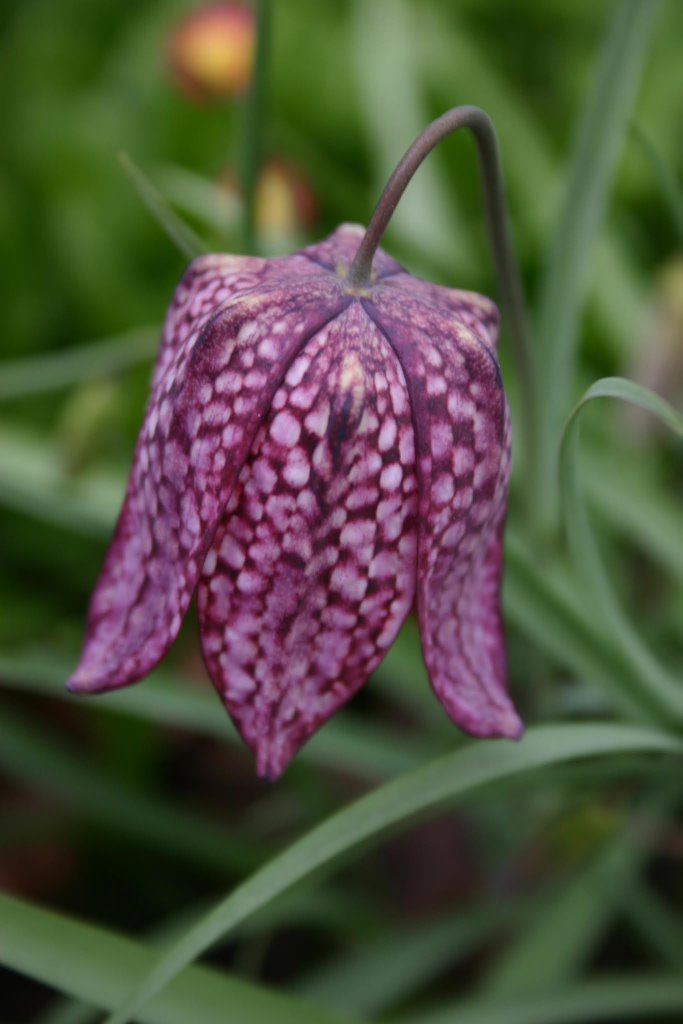
Dette er ment å være en blogg om strikking/hekling, men jeg er like hagegal som håndarbeidsgal, derfor sniker det seg inn hagebilder (beklager, det er utenfor min kontroll ;-) Akkurat denne blomsten har jeg ønsket meg i mange år. Er ikke mønsteret flott? Det er en Kongekrone / Rutelilje (Fritillaria meleagris). Andre navn er rutekrone, sjakkbrettlilje og vibeegg. Løkene satte jeg i fjor høst, og nå har de tittet opp og gjort meg alldeles lykkelig :-)

This is supposed to be a blog about knitting and crocheting. It’s just that I’m equally in love with my garden as I am in yarn etc. So these pictures from my garden just tend to end up in this blog (sorry, it’s out of my control ;-). I’ve wanted this particular flower for many years, and last autumn, I finally got around planting some bulbs. I think they have such a lovely pattern. According to BBC’s plant finder they are called Snake’s head fritillaries (Fritillaria meleagris), and they make me really really happy :-)

24 April, 2006

Sitteunderlag / "Butt cushion"


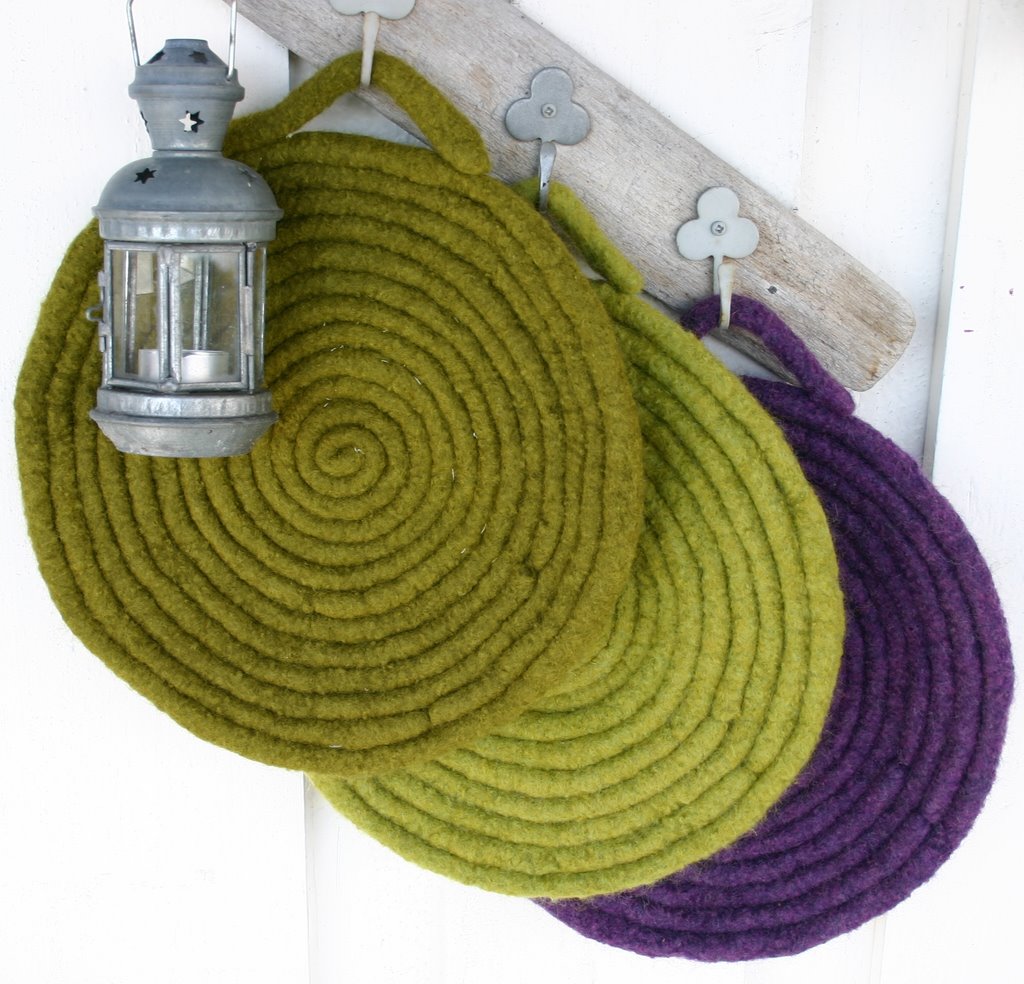
Jeg har lagt bort strikkepinner og heklenål, og virkelig gått back to basic. Jeg har bedrevet fingerhekling / fingerstrikking rett og slett. Det er vel egentlig sett på som ganske barnslig, noe man gjør i barnehagen, men jeg er egentlig ganske fornøyd akkurat nå, både med fingerheklingen og med det ferdige resultatet. Jeg har en kald steintrapp som leder ned i hagen. Der liker jeg å sitte med kaffen min og skue utover mitt lille rike. Problemet på denne årstiden er at trappa kan bli litt vel kald. Jeg har sett at mange har laget sitteunderlag, og det fant jeg ut ville være midt i blinken for trappa mi.
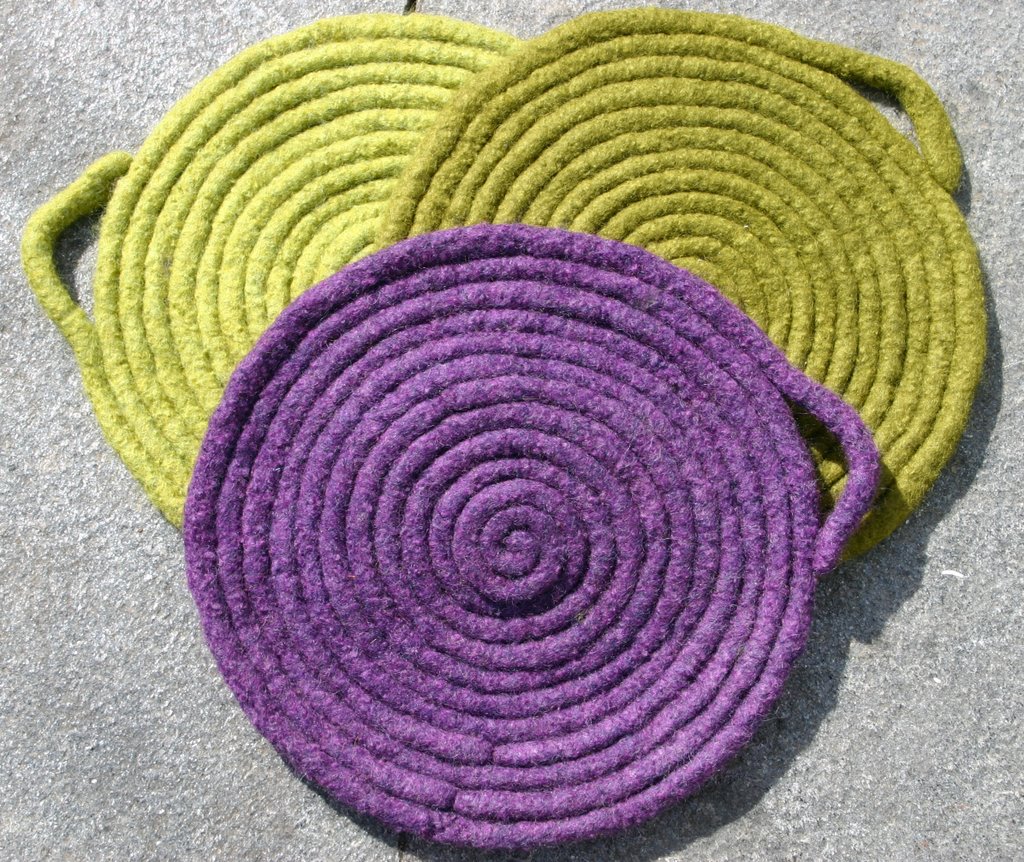
Jeg har brukt Eskimo fra Garnstudio, til sammen 4 nøster for hvert sitteunderlag. Hvert nøste er fingerheklet til en lang ”slange”, som deretter er tovet i vaskemaskinen. Resultatet var fire tovede ”slanger”. Disse er så sydd sammen for hånd til en spiral, som er ca 30 cm i diameter. Og voilá – sitteunderlag!

Du er velkommen til å bruke oppskriften til å lage sitteunderlag til deg selv eller som gaver, eller i ikke-kommersielle sammenhenger som i skole/barnehage og lignende. Du kan ikke bruke denne oppskriften til kommersielle formål uten å spørre.

En ting som stadig har kommet opp i ettertid, er frustrasjon over det faktum at det er et møysommelig arbeid å sy dem sammen. Men så kom denne kommentaren:

"Elin said...
Hei! Vart så inspirert at eg berre måtte prøva med ein gong. Kjempefin ide! Men å sy det saman tok så veldig lang tid!
Så eg har gjort noko anna:
Eg har festa dobbeltsidig tape på ei papplate stor nok til å romma storleiken på sitteunderlaget. Så har eg "limt" fast spiralen med remsene på plata. Deretter pensla eg eit godt strøk med naturgummi (flaske kjøpt på Panduro) på den sida som vender opp. Når det tørka er det både limt saman OG det er vanntett på eine sida.
På den måten vart prosjekt "sitteunderlag" nett så kort og greit som eg ville det skulle vera - og resultatet vart kjempefint:-)
Ps. Om du har pensla for lite på er det berre å ta eit nytt strøk når det er tørt:"

Tusen takk for tipset Elin - du er lur du! :-D


I’ve put my knitting needles and crocheting hooks away, and really gone back to basic. I’ve just used my fingers. I don’t know what this is called in English (please enlighten me if you can), but translated directly from Norwegian it would be called something like “finger-crocheting” or ”finger-knitting ”. Finger knitting is something children do in kindergarten, so I guess it’s viewed as a pretty childish thing to do. But who cares, I’m quite satisfied with both my childishness and the finished result.
I’ve got some stairs made of stone that are leading down to my garden. I like to sit on the top, overlooking my little kingdom. The problem is that at this time of year, the stone is quite cold to sit on, so I needed something to sit on that would keep me warm.
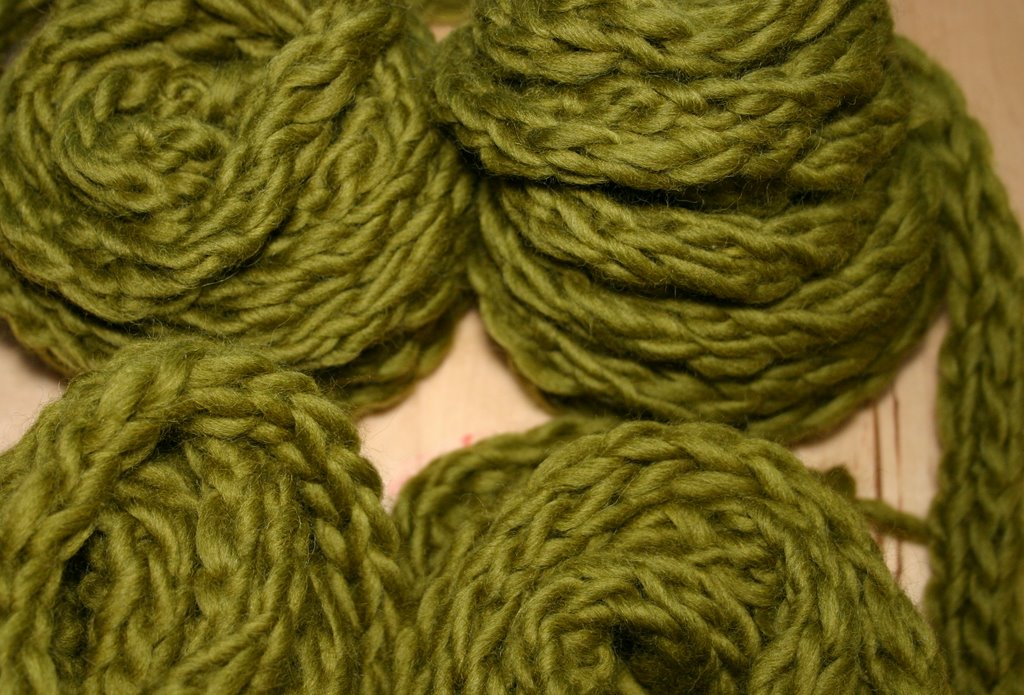
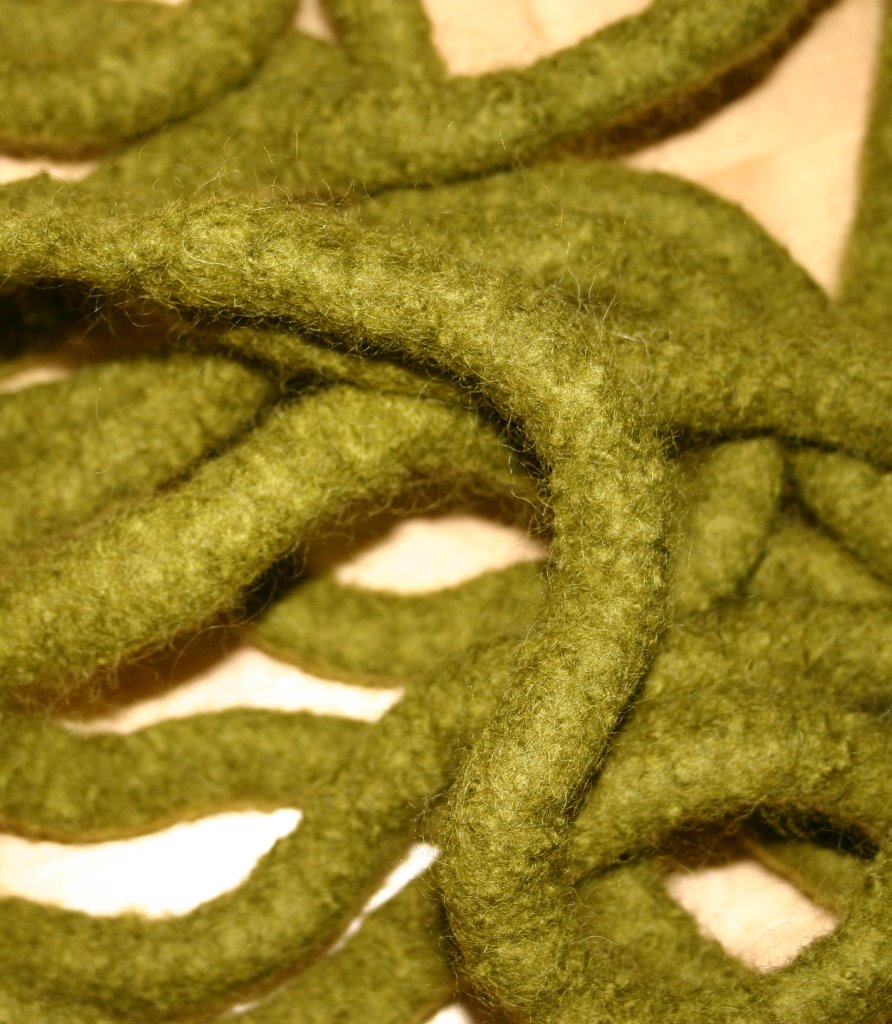
I’ve used Eskimo from Garnstudio, four balls of yarn per ”butt cushion”. Every ball is “finger-crocheted” into a long ”snake”. These ”snakes” were felted in a washing machine, and the result was four felted ”snakes”. They were sewed together by hand to form a spiral shape, about 30 cm in diameter. And voilá – a ”butt cushion” :-)


(The English version was edited the 27. of april because Annie was kind and taught me the word "butt cushion". Oddly enough, the Norwegian education system never taught us words like that :-) I'm glad Annie is helping me. Thank you Annie!)

You are welcome to use this pattern to make butt cushions for yourself or as gifts, but not in a commercial context.

I got a smart advice from blog reader Elin, concerning how it's possible to assemble the butt cushion without sewing it together: Take a cardboard plate, and put double sided tape on it. Then you can glue the "snakes" in place, forming a spiral. Then you put on liquid rubber. When it has dried, it is both glued together and water repellent.
This blog has got really clever readers. Thank you very much Elin :-)


Unfelted "snakes"


Felted "snakes"


Hvordan fingerhekle:

How to finger knit:


11 April, 2006

Tekniske problemer / Technical problems

Jeg har litt trøbbel om dagen. Først sluttet Mp3 spilleren å virke. Deretter har PCen tatt kvelden. Jeg blir frustrert når tekniske ting går i stykker. Jeg kan ikke ty til de vanlige metodene for reparasjon som å slå i en ekstra spiker, pøse på med lim eller gi TVen et spark. Heldigvis har ikke strikkepinner og heklekroker batteri, hardware eller software, så de virker så lenge jeg virker. Det er i allefall en trøst. God Påske :-)

I'm having a bit of trouble. First my Mp3-player stopped working. Then my computer stopped working. When technical equipment fails, I get really frustrated. I can't use my usual methods for repairing stuff, like add another nail, glue it together again or give the TV a kick. Fortunately, knitting needles and crocheting hooks haven't got a battery, hardware, or software. As long as I function, the needles and hooks function. That's a comfort :-)